
Short answer: a slab leak is a leak in a water or drain line that runs under a concrete slab foundation. Because the pipe is out of sight, the first clues are usually indirect: a water meter that keeps moving when nothing is running, a bill that jumps for no reason, or a warm or damp spot on the floor. Two free EPA tests can tell you whether you have a leak somewhere. A plumber’s leak detection visit then tells you whether it is under the slab. Detection typically runs $150–$400, and repairs range widely, from about $500 to $5,000, with rerouting at $3,900–$7,500.
This is general information for homeowners in Tulsa and across Oklahoma. It is not a diagnosis of your home, and none of the signs below proves a slab leak on its own.
Possible signs of a slab leak
None of these is proof, but each is a reason to run the tests in the next section:
- The water meter moves with everything off. This is the most useful clue, because it confirms water is going somewhere.
- A higher water bill with no change in how your household uses water.
- The sound of running water when no fixture, appliance or sprinkler is on.
- A warm spot on the floor, which can point to a leak on a hot water line.
- Damp carpet, warped wood or loose tile away from any bathroom, kitchen or obvious source.
- Weaker water pressure at several fixtures at once.
- A water heater that runs more than usual, if hot water is escaping through a leak.
Plenty of ordinary problems cause some of these symptoms too: a running toilet, a dripping outdoor faucet or an irrigation leak can all move the meter. That’s why the next step is to rule out the easy causes.
Two EPA tests to run first
The U.S. Environmental Protection Agency’s WaterSense program says the average household’s leaks can waste nearly 10,000 gallons of water a year. It recommends two simple checks that cost nothing:
- The meter test. Read your water meter, then use no water at all for two hours: no faucets, toilets, ice maker, dishwasher, washer or sprinklers. Read it again. If the reading changed, water is leaking somewhere.
- The toilet dye test. Put a few drops of food coloring in each toilet tank and wait 10 minutes without flushing. If color shows up in the bowl, the flapper is leaking. A running toilet is a common reason a meter moves, so rule it out before you suspect the slab.
If the toilets pass and the meter still moves, check the outdoor faucets and the irrigation system. If you still can’t find a cause, it is time for professional leak detection. The EPA’s details are on its Fix a Leak Week page.
Oklahoma soils: a reason for caution, not a diagnosis
Oklahoma State University Extension says “shrink-swell problem soils are common in many parts of the state and can crack foundations and walls,” and that soils with 30 percent or more clay expand and contract a great deal as they wet and dry. Soil movement can stress pipes and foundations. That is a reason to take a moving meter seriously in an Oklahoma home on a slab.
It is not proof that the soil caused a particular leak, and no one can tell you that without testing. If you are curious about the soil under your home, the USDA’s Web Soil Survey shows shrink-swell ratings for any address. Then let a licensed plumber find the actual leak.
How plumbers find and fix slab leaks
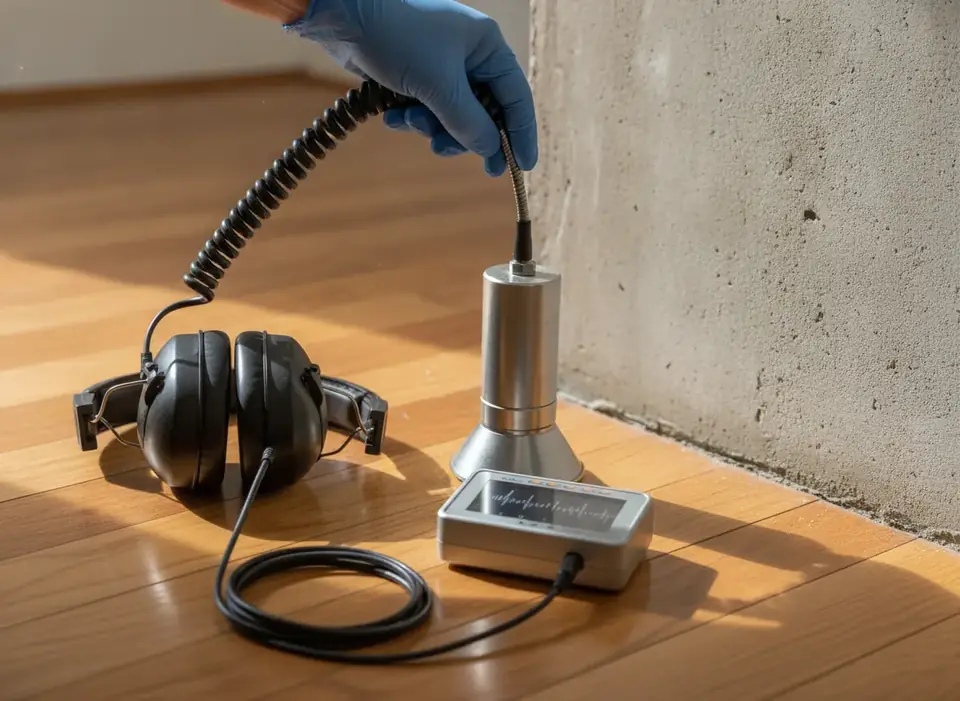
Leak detection pins down where the leak is before anyone cuts into concrete. A plumber may isolate the hot and cold sides of the system, pressure-test lines and use listening or sensor equipment to narrow the spot. Once it is found, the usual options are:
- Spot repair: open the slab at the leak, repair the pipe and patch the concrete.
- Lining: seal the inside of the existing pipe, where the pipe and leak suit it.
- Reroute: abandon the leaking line and run a new one through walls or the attic. It costs more up front but avoids breaking the slab.
Ask each contractor which approach they recommend for your leak and why, and whether flooring removal and replacement is in their price.
Typical slab leak prices
Typical ranges from published cost guides (2025–2026). These are estimates, not quotes, and they are national figures:
| Job | Typical range |
|---|---|
| Slab leak detection | $150–$400 |
| Slab leak repair | $500–$5,000 (rerouting can run $3,900–$7,500) |
| Whole-house repipe (~2,000 sq ft) | $2,300–$5,100 |
Permit fees are often billed separately. More jobs are in the Tulsa plumbing cost guide.
Slab leak repair needs a permit in Tulsa
The City of Tulsa’s plumbing permit form has a “slab leak” line item (drain or water) and a separate “reroute piping” item, so both are permitted work. The Permit Center says “Only a Licensed tradesperson may apply for trade permits,” so the plumber you hire should pull it. Suburbs have their own rules: Broken Arrow, Owasso, Bixby, Jenks, Sand Springs and Sapulpa each run their own permit office. See plumbing permits in Tulsa and the suburbs. This is general information, not legal advice.
One more point on responsibility: in Tulsa, the sewer and water lines from your house to the City’s connection are generally the homeowner’s responsibility, and lines under your slab are part of your home’s plumbing.
If water is actively spreading
If water is coming up through the floor or soaking flooring, shut off the main water valve first, then call for help. Many Tulsa plumbers offer after-hours service, usually at a higher rate. Our emergency plumber page explains what to expect.
Before you hire
- Ask for the contractor’s Oklahoma plumbing contractor license number and check it on the Construction Industries Board’s “Are They Licensed?” page.
- Ask whether they are registered with your city and will pull the permit.
- Get the detection fee and the repair price in writing, including concrete and flooring work.
Slab leak questions
How do I know if I have a slab leak?
Start with the EPA meter test: read your water meter, use no water for two hours, then read it again. If it moved, you have a leak somewhere. Rule out toilets with a food-coloring dye test and check outdoor faucets and sprinklers. If the meter still moves, a plumber’s leak detection visit can show whether the leak is under the slab.
How much does slab leak detection cost?
Published cost guides (2025–2026) put slab leak detection at about $150 to $400, and repairs at roughly $500 to $5,000. Rerouting a line can run $3,900 to $7,500. These are national estimates, not quotes. Your price depends on where the leak is, the repair method, flooring and access, so get it in writing first.
Do Oklahoma soils cause slab leaks?
Oklahoma State University Extension says shrink-swell clay soils are common in Oklahoma and can crack foundations and walls, and soil movement can stress pipes and foundations. That does not prove soil caused any particular leak. Only testing can find the cause and location, so let a licensed plumber check before you assume anything.
Get slab leak quotes
Tulsa Plumbing Pros connects homeowners in Tulsa, Broken Arrow and nearby cities with independent, licensed local plumbing contractors for free, no-obligation quotes. The plumber you choose quotes, pulls any permit, and does the work directly with you. Learn more on our leak detection page or request a free quote.